
With Chung Fu Martial Arts Meditation Traditional Training Program, students learn and practise physical movements using the concept of “meditation in motion”. The methods used are in accordance with natural law principles, or the essence of natural order. These principles and their order are the subject of a collection of elemental truths, which are documented in the ancient Chinese text, “I Ching” or “The Book of Changes.” This volume, translated into English in the 20th century, uses symbolism to describe ethical values and philosophies common to all people.
The Way of traditional training encompasses the aspect of correlating the mind, the body and the emotions. A step-by-step method ensures that all types of students will learn. The stages of training are simplified to suit all age groups and skill levels.
The original Ch’an – Kung Fu Way (Bodhidharma’s intention) is translated today in a manner to provide for a clear and simple order of training, allowing all students to achieve results. The process is open to everyone who has a sincere calling and chooses to demonstrate a commitment to continuous training.
The Way of traditional training encompasses the aspect of correlating the mind, the body and the emotions. A step-by-step method ensures that all types of students will learn. The stages of training are simplified to suit all age groups and skill levels.
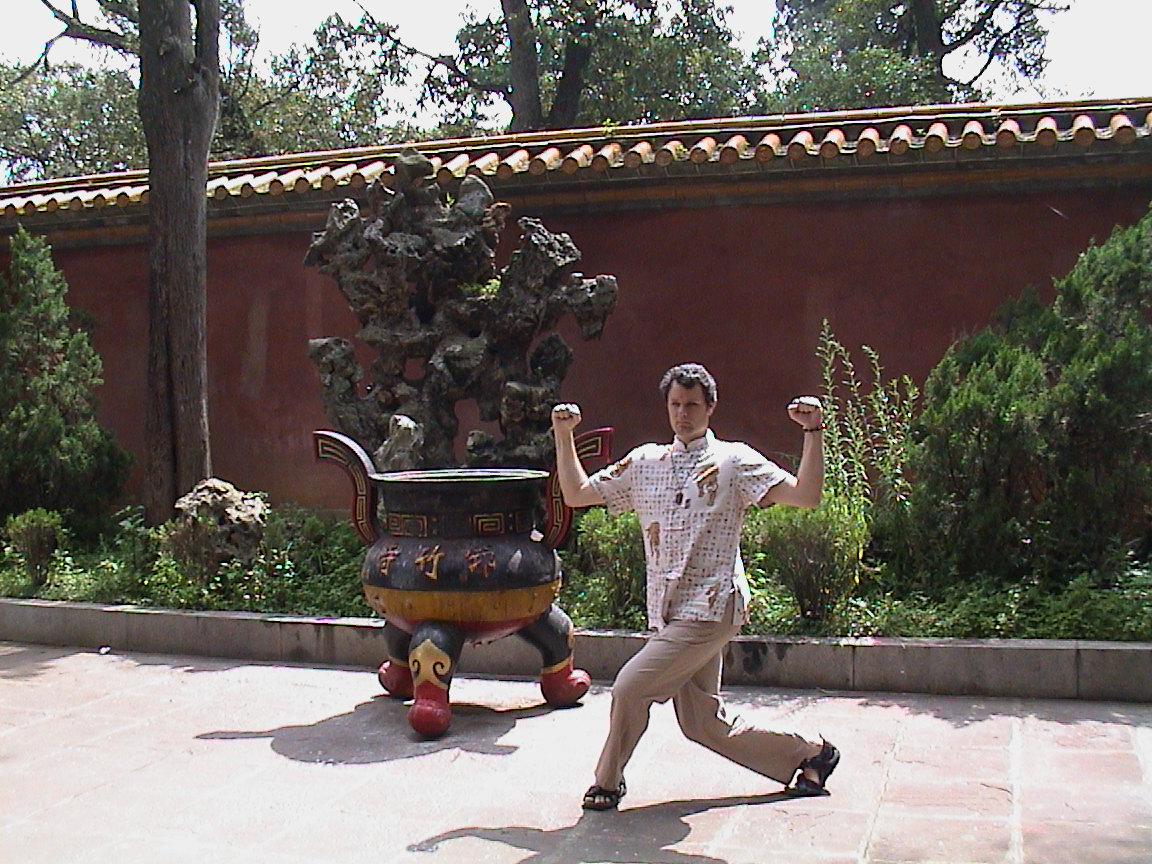
The original Ch’an – Kung Fu Way (Bodhidharma’s intention) is translated today in a manner to provide for a clear and simple order of training, allowing all students to achieve results. The process is open to everyone who has a sincere calling and chooses to demonstrate a commitment to continuous training.
What Does Chung Fu Traditional Training Consist Of?
Six Foundational Principles Introduction
The foundational level of training focuses on Elemental Movements and uses two primary physical principles: Biomechanics and Muscle Calibration. After demonstrating constancy with these physiological principles at the beginners level of training, students move on to learning Compounds (combinations) at the intermediate level of training. Now the student is made aware of the next two following principles concentrating on the psycho-emotional aspects of one’s being: Vital Mindset and Supreme Value. At the advanced level of training, students focus on compositions, drills and freestyle application where two more foundational principles are revealed: Yin Yang Execution and Six Harmonies.
Open any of the 6 toggles below to learn more regarding each principle:
1. Elemental Movement
1. Eight stances
2. Eight arm strikes
3. Eight leg strikes
4. Eight arm block/parries.
Proficiency with these elements prepares students to progress through their training with a firm basis in the essentials of, “practical and philosophical” knowledge.
Training the elements give tangible physical evidence of what is occurring in the student’s mind both mentally and emotionally. Mental processes are first needed to execute the movement. The physical result starts with a mental sequence of events and leads up to the physical action. The elements are precise positions required to be preformed with great consistency. This gives the mind an absolute goal and the practitioner and/or teacher can easily detect any deviation from this goal that is manifested by the body, consequently the mind too.
2. Muscle Calibration
Calibration is the student’s ability to manipulate muscle relaxation and tension. The human skeleton resembles a complex system of levers, with each lever, and the intervals between levers, having muscles that pull and regulate each other, fixed in place by ligaments. Under the direction of the brain and the instincts, the muscles can produce movement by alternating tension and relaxation, thus together with a skeleton forming a complex moving structure.
In Chinese philosophy this alternation is known as the Yin and Yang of your muscles or the softness and hardness that are called here, relaxation and tension.
The principle of calibrating muscle relaxation and tension also involves the awareness of “muscle differential relaxation”. This is the ability to distinguish between muscles that are needed for the movement you are performing or not.
With further explanation, it’s your ability to manipulate the tension and relaxation of specific muscles for the purpose of creating a desired effect in the basics or techniques executed. When movements are executed there are times the student needs to remain more relaxed and then like the flip of a light switch, tension is turned on and applied. As the example of executing a punch it’s good to remain relaxed in the beginning so you can start with lightening speed and then as you are hitting the target it’s good to tense the muscles so you will have a powerful impact.
Having the skill to calibrate (manipulate muscle relaxation and tension) will give you better control of your body’s performance in regard to the application of speed and power.
Students learning the basics are taught the use of relaxed muscle tension from the start to nearly the end of the movement and then hard muscle tension to the completion position. Three different velocities are emphasized at this level. They are slow, medium and full. Medium velocity can be described as the least amount of effort needed to defy gravity. Directly corresponding to the muscle tension already stated above; as a general rule the novice level of training requires a conscious effort of medium velocity from start to middle in the execution of a element movement and full out velocity from middle to the end or position. Note: when practicing for accuracy in the biomechanics principle, it is wise to start out in a slow velocity until such a time that all geometrical guide points are adhered to with great consistency.
3. Vital Mindset
- Combative Mindset
- Healing Mindset
Both categories use the same mental energy but differently. One, Combative Mindset uses intent/energy for the purpose protecting self or others. The second, Healing Mindset uses Intent/energy for the purpose of revitalizing self or others.
Both categories require an unwavering, profound inner seriousness to accomplish the end result.
4. Supreme Value
- Combative applications
- Healing applications
Pinpointing with laser like focus the superior aim or usage of what is being applied. Possessing the knowingness in its greatest effectiveness
5. Yin Yang Applications
Offensive – Defensive Approach
Stepping
Striking
Bobbing, weaving, trapping or blocking
Grappling
The ability to have firm (yang) or yielding (yin) capabilities on demand with healing applications:
Soft or Harder Massage
Acupuncture or Acupuncture
Hot or Cold Remedies
Outside or Inside Focus of Treatment
6. Six Harmonies
Hexagram #1 The Creative, Yijing
“Applied to the human world, these attributes show the great man the way to notable success:
‘Because he sees with great clarity causes and effects, he completes the six steps at the right time and mounts toward heaven on them at the right time, as though on six dragons.’
The six steps are the six different positions given in the hexagram, which are represented later by the dragon symbol. Here it is shown that the way to success lies in apprehending and giving actuality to the way of the universe [tao], which, as a law running through end and beginning, brings about all phenomena in time. Thus each step attained forthwith becomes a preparation for the next. Time is no longer a hindrance but the means of making actual what is potential.”
The art, skill and expanded consciousness of Six Harmonies applies to both branches of Chung Fu Traditional Study: Combative and Healing Applications.

Hodgkinson Sifu had owned and operated professional, commercial schools for decades. His focus now has shifted to teaching smaller group classes and personal instruction, with select students that appreciate a traditional way of martial and healing arts training. Having trained in a number of different martial and healing modalities, Sifu has adjusted his traditional curriculum to include relevant aspects of his multi-faceted experience.
Currently traditional training is taught in either group classes or personal one-on-one instruction. Group classes are available for adults and also for kids with their parents. In the group classes the curriculum follows a set schedule of what is to be learned each week.
Six Major Levels of Training - Basic Curriculum Overview
In Chung Fu Martial Arts Meditation traditional training there are six main levels of education and within each of these 6 levels there are numerous sub-divisions of detailed curriculum.
Below you will find a basic outline of 6 macro educational levels and some initial sub-levels of the traditional training program. For the micro understanding of each level please consult Master Educator, Terry Hodgkinson.
Open any of the 6 toggles below for a basic understanding of each level:
1. Beginners Level
Duration 1 – 2 years
A) Theory and philosophy
B) Reading list
C) Warm up & stretching exercises
D) Proper breathing
E) Meditation – 3 styles
F) Yijing (I Ching) basics
G) Basics known as Elemental Movement – 32 distinct movements
H) Relatives of basic Elemental Movements
I) Compounding AKA combinations
2. Intermediate
Duration 2 – 3 years
A) Theory and philosophy
B) Reading list
C) Yijijng (I Ching) intermediate
E) Partnered compounding drills
F) Take down drills
G) Grappling basics
E) Partnered self defence combatives
H) Qigong healing movement
I) Awakening the Dragon Composition
3. Advanced
Duration 3 – 4 years
A) Theory and philosophy
B) Advanced meditation practice
C) Reading list
D) Yijing (I Ching) advanced
E) Five Animal Style compositions
F) Hung compositions
G) Bo Staff compositions
H) Wudang Qigong (Chi Kung) and Taiji (Tai Chi) Compositions
I) Combatives (drills) and sparing
4. Junior Professional
Duration 3 – 5 years
Three Degrees of Study
5. Master Educator
Duration 4 – 6 years
Three Degrees of Study
6. Grandmaster Educator
Duration 12 – 15 years
Four Degrees of Study
The Three Modes of Training
- Theory – intangible, invisible realm – realizing
- Practice – tangible, visible realm – controlling
- Application – natural and spontaneous – using